Sunday, May 6, 2018

Apple tops profit expectations, plans $100bn cash return boost

Apple Inc on Tuesday beat revenue and profit expectations in its March quarter as it sold 52.2 million iPhones, barely below Wall Street targets and showing some resilience as global demand for smartphones wanes.
The company also predicted a revenue range of $51.5-53.5 billion for the June quarter, with a midpoint ahead of the Wall Street's $51.6-billion expectation.
Apple also boosted its capital return program by $100 billion, with repurchases from the increase set to begin in the June quarter, and said it bought $23.5 billion of stock back in the March quarter, a sign that it is bringing back most of its hundreds of billions of dollars in cash to the United States.
The share repurchases in the March quarter drove Apple’s cash net of debt down slightly to $145 billion.
“We are returning the cash to investors as we have promised,” Chief Financial Officer Luca Maestri told Reuters in an interview.
The results sent Apple shares up 3.7 percent to $175.50 in after-hours trading.
Apple has been at a challenging crossroads this year with sales of its flagship iPhone X disappointing many observers. Investors have watched Apple closely in recent weeks as a string of poor forecasts from the smartphone supply chain signalled that iPhone demand may be lower than previously expected.
They have also been watching carefully for signs of what Apple plans to do with its hundreds of billions of dollars in cash.
Apple posted revenue for its March quarter of $61.1 billion, up from $52.9 billion last year. Wall Street expected $60.8 billion, according to Thomson Reuters.
The company sold 52.2 million iPhones versus expectations of 52.3 million, according to data from Thomson Reuters, up from 50.7 million last year.
Average selling prices for iPhones were $728, compared with Wall Street expectations of $742. Maestri told Reuters that the company’s seasonal drawing down of iPhones sitting on store shelves accounted for some of the difference because it was concentrated on higher-end iPhone models this year.
Profits were $2.73 per share versus expectations of $2.68 per share and up from $2.10 a year ago.
The company forecasted a midpoint of $52.5 billion in revenue for the June quarter, beating analyst expectations of $51.6 billion.
Apple’s services business, which includes Apple Music, the App Store and iCloud, posted $9.1 billion in revenue compared with expectations of $8.3 billion. Heading into earnings, investors were hopeful that growth in that segment could help offset the cooling global smartphone market.
Apple traditionally updates its share buy-back and dividend program each spring, and the $100 billion it added this year compares with an increase of $50 billion last year. The company also increased its quarterly dividend 16 percent, compared with a 10.5 percent increase last year.
In February, Apple said it planned to draw down its excess cash, though Chief Executive Tim Cook had downplayed the possibility of a special dividend.
But investors have had concerns around Apple because of a brewing trade tensions with China. While there has not yet been a tariff on devices such as Apple’s iPhone, Cook last week travelled to Washington to meet with US President Donald Trump at the White House to discuss trade matters.
“We believe tariffs at the end of the day are a tax on the consumer,” Maestri said.
Apple has been emphasizing its contributions to the US economy in recent months, outlining a $30-billion US spending plan and highlighting the tens of billions of dollars it spends each year with US-based suppliers.
In recent months, Apple has been emphasizing the size of its overall user base, which includes used iPhones, rather than focusing strictly on new device sales, a sign of the increasing importance of making money off users without selling them new hardware.
Apple shares have dropped 0.1 percent this year and closed at $169.10 on Tuesday, down 1.8 percent from their price of $172.26 at the start of the year. Their performance lags the NASDAQ Composite Index, which was up 3.3 percent for the year.

US dollar weakens by Rs1.30 in open market

KARACHI: The Pakistani rupee strengthened against foreign currencies in the open market on Saturday.
The US dollar fell by Rs1.30 to Rs117.30 in the open market, after peaking in the recent months.
The euro weakened by Rs2 to hit Rs140, while the pound fell by Rs2 to Rs159.50.
President of the Forex Association of Pakistan, Malik Bostan told Geo News that a greater supply from the State Bank and reduced demand for the dollar led to a decline in its value in the open market, and a subsequent decline in other foreign currencies. 
Since December last year, the rupee has cumulatively shed almost 9% of its value. The State Bank of Pakistan has attributed the rupee’s decline to supply and demand dynamics of foreign exchange in the inter-bank market.
The country’s trade deficit has stood at almost $20 billion in the past eight months, according to statistics issued by the State Bank. As of last month, Pakistan’s imports amounted up to $35 billion while the exports stood at a meager $16 billion, leaving a huge gap between the payments received and made.

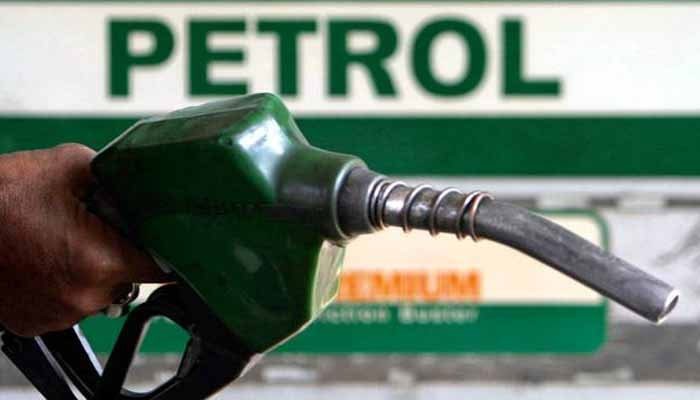
Budget FY 2018-19: Govt recommends 200% increase in petroleum levy

https://www.geo.tv/latest/193140-budget-fy-2018-19-govt-recommends-200-increase-in-petroleum-levy
KARACHI: The government has recommended an increase of nearly 200% in petroleum levy in the new budget, for fiscal year 2018-19.
According to experts, the increase is feared to cause a rapid rise in inflation.
Under the Finance Bill 2018, tax on diesel, petroleum, crude oil and high-octane fuel would be increased from Rs10 per litre to Rs30. The same increase would be imposed on the levy of light speed diesel and gasoline, while levy on local liquefied petroleum gas could go up by 328%.

A day earlier, sources told Geo News that Oil and Gas Regulatory Authority (OGRA) has recommended a hike in prices of petroleum products for May. In a summary sent to the Ministry of Petroleum, OGRA recommended Rs3.22 per litre increase in the price of petrol.
Besides, an increase of Rs6.97 per litre was recommended for kerosene oil, while Rs6.95 hike was suggested for diesel price, sources said.
However, the final approval for revision of petroleum prices rests with the prime minister, sources added.
The changes in prices would be implemented in the upcoming fiscal year 2018-19, the budget for which was announced a day earlier.
The sixth budget of the Pakistan Muslim League-Nawaz government was presented on April 27 with an outlay of Rs5,932.5 billion. The budget was presented amid a strong protest from the opposition benches against the full-year financial plan despite the incumbent government's remaining tenure of three months.
The development budget for FY18-19 was set at Rs 1.067 trillion, while Defence Affairs and Services was allotted Rs 1.1 trillion. The Federal Public Sector Development Program and Interest Payment budgets were set at Rs800 billion and Rs1.62 trillion respectively. For pension payments and subsidies, the government set aside Rs 342 billion and Rs174 billion. 

FDA approves Novartis combo therapy for aggressive type of thyroid cancer

The US Food and Drug Administration on Friday approved Novartis AG’s combination therapy to treat an aggressive type of thyroid cancer.
The therapy, which uses Novartis’ Tafinlar and Mekinist, was approved to treat anaplastic thyroid cancer that cannot be removed surgically or has spread to other parts of the body, and has a type of abnormal gene known as BRAF V600E.
This is the first FDA-approved treatment for patients with this form of thyroid cancer and the third type of cancer with this specific gene mutation, the FDA said
The company has been expanding the use of this drug for other diseases as well. In combination, Tafinlar and Mekinist are approved for use to treat a type of lung cancer that has the BRAF V600E gene.
The FDA had last month approved the combination to treat a type of melanoma.

‘Taken in by fake news’: Shashi Tharoor clarifies after tweeting about Raghuram Rajan’s ‘appointment as Governor of the Bank of England’

If you are among those who came across (and believed) the news that Raghuram Rajan, former Governor of the Reserve Bank of India, has been appointed the Governor of the Bank of England, we are sorry we will have to disappoint you. The 55-year-old firebrand economist found himself making headlines again, as fake news claiming his ‘new appointment’ started doing the rounds of the Internet. A Facebook post by Satprakash Sharma on April 28, congratulating Rajan, has garnered close to 8,000 shares by now. Shashi Tharoor too, found himself believing the news as he tweeted out a report by a news portal. Rajan meanwhile, clarified to Alt News that this is fake news and that he is “happy with my current job and have not searched for, nor got, any other.”
Tharoor took to Twitter to clarify that he was “taken by the fake news” this time.
This is his first tweet, finding Rajan’s appointment “remarkable”.

pp